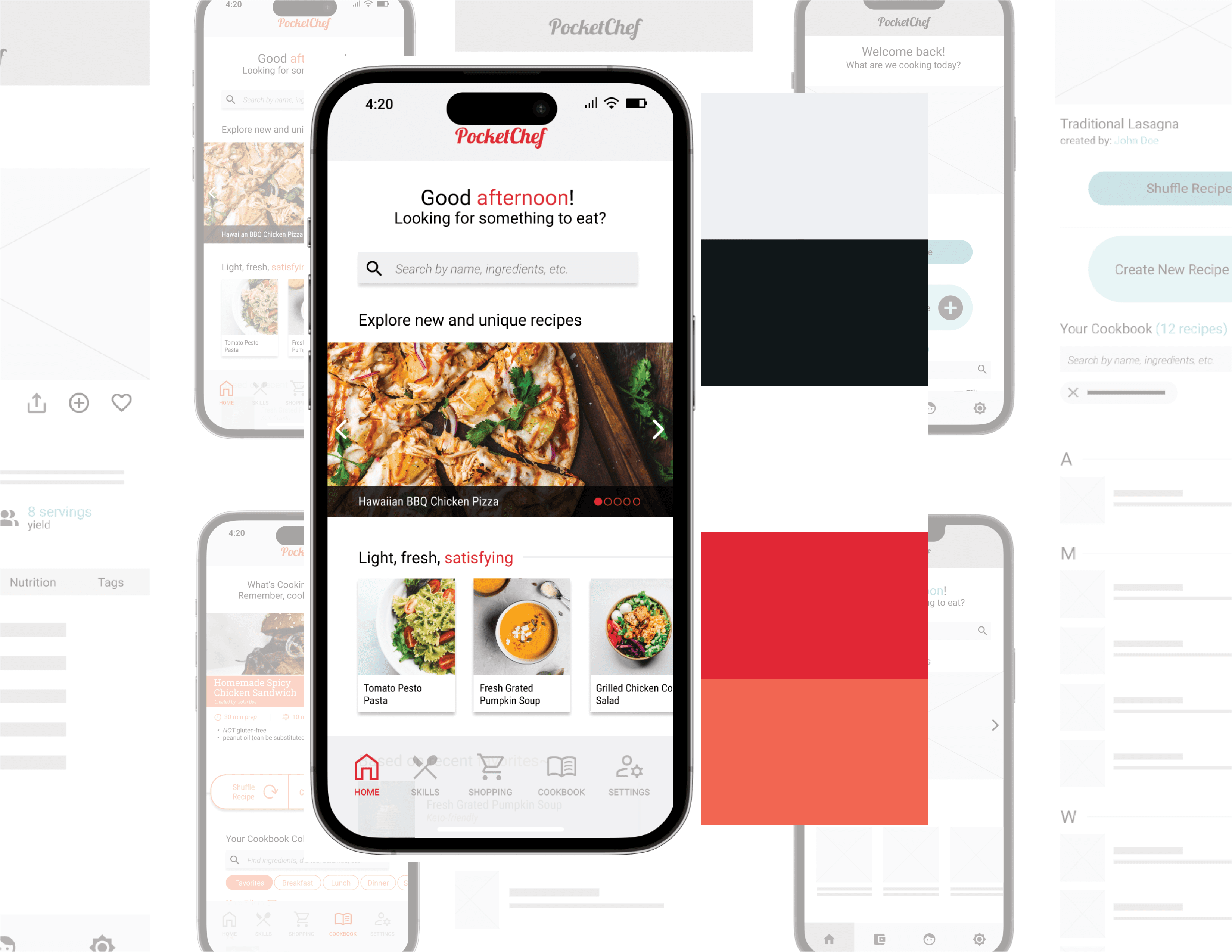
As I began my journey with the Google UX Design Course, I was tasked with creating an app prototype by the end of the course. I had a dream about making a simple, intuitive cookbook that can record all my favorite recipes and come back to the core saying: “you eat with your eyes first” — a basic concept in food where you visually captivate your audience when presenting your culinary arts.
Analysis & Surveys
I wanted to understand how users felt about the current cooking apps on the market and what kind of features would benefit their lifestyles. I conducted a competitive analysis on some of the apps I found such as NYT Cooking, Tasty, and Epicurious, which are regarded as some of most popular choices.
After synthesizing the data, I created an additional survey around the results and requested feedback from 50 users, with 23 completed surveys. I wanted to see if the reviews of the existing apps matched what my target audience was also experiencing. I found the following to be true:
Users with busy lifestyles can’t commit large amounts of time to cooking.
Unsatisfying images from various recipes make users give up on recipes.
Many apps are “jam-packed” with features that are irrelevant to the users’ end goals, making navigation frustrating and overwhelming.
Wireframe & Mockup
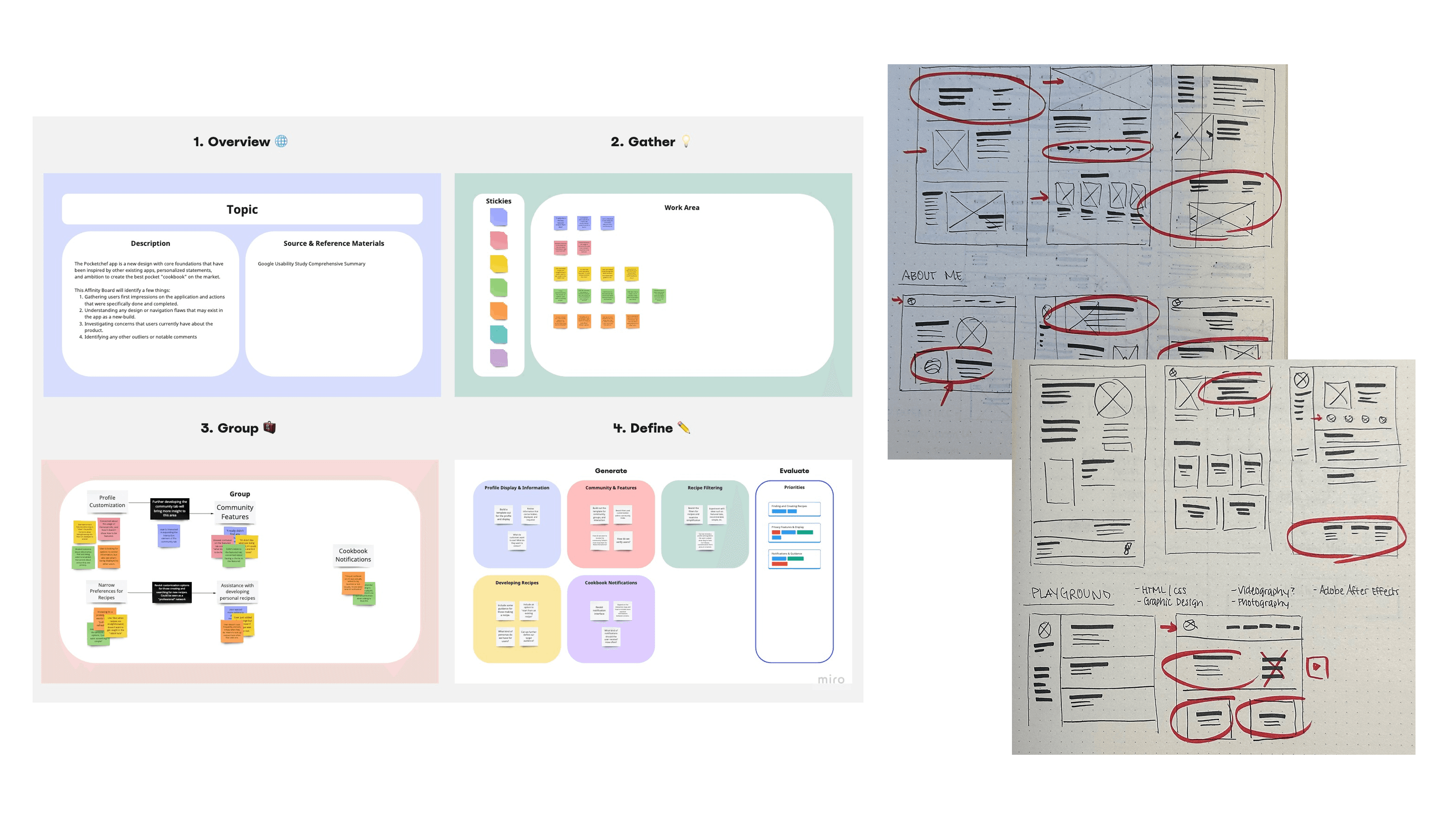
Using the competitive analysis, surveys, and reviewing the apps, created some paper wireframes to draft potential layouts for my approach on PocketChef. I highlighted several areas that felt unique and easy to navigate and took those components into other iterations, as well as designing
Color Selection
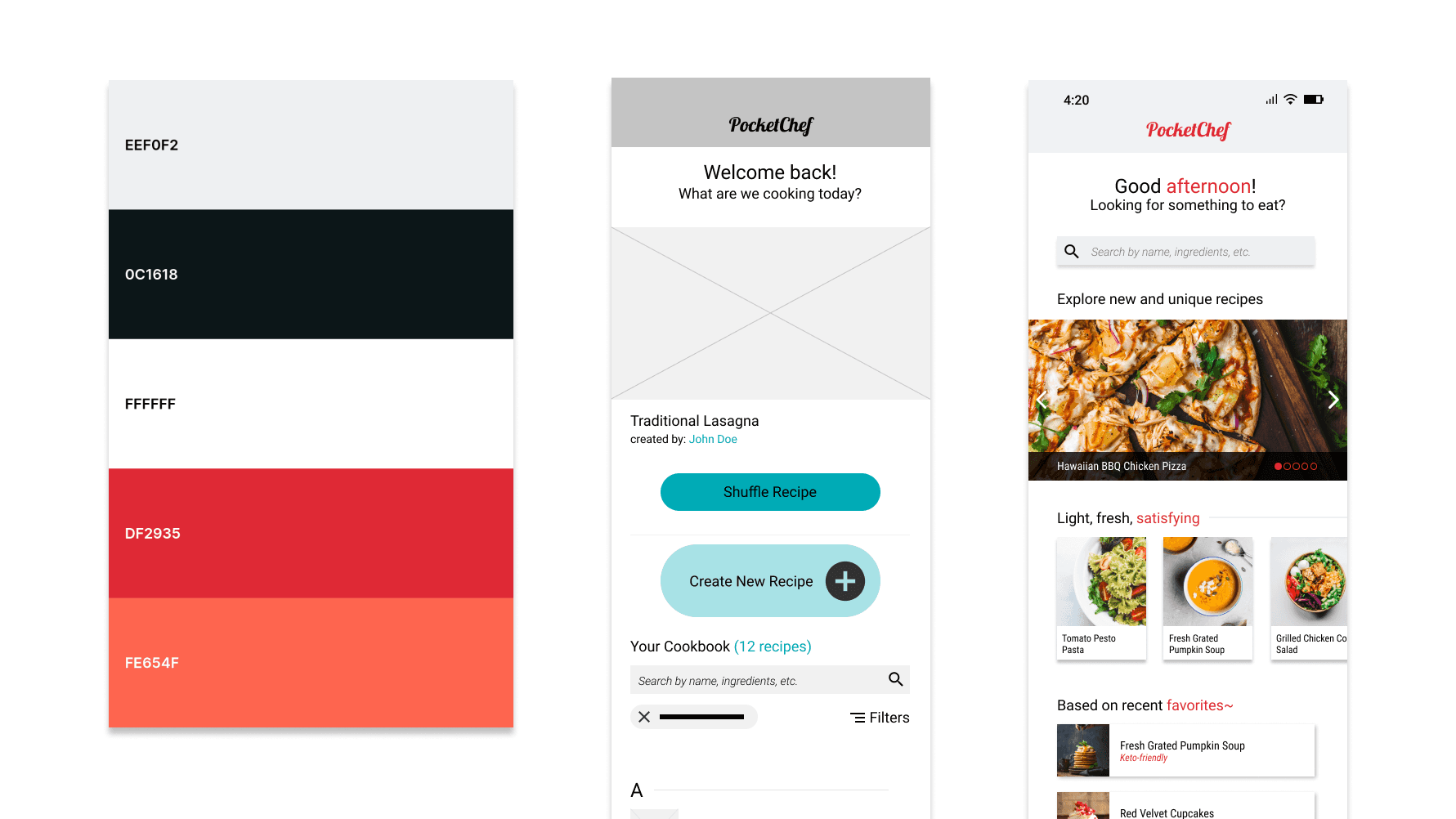
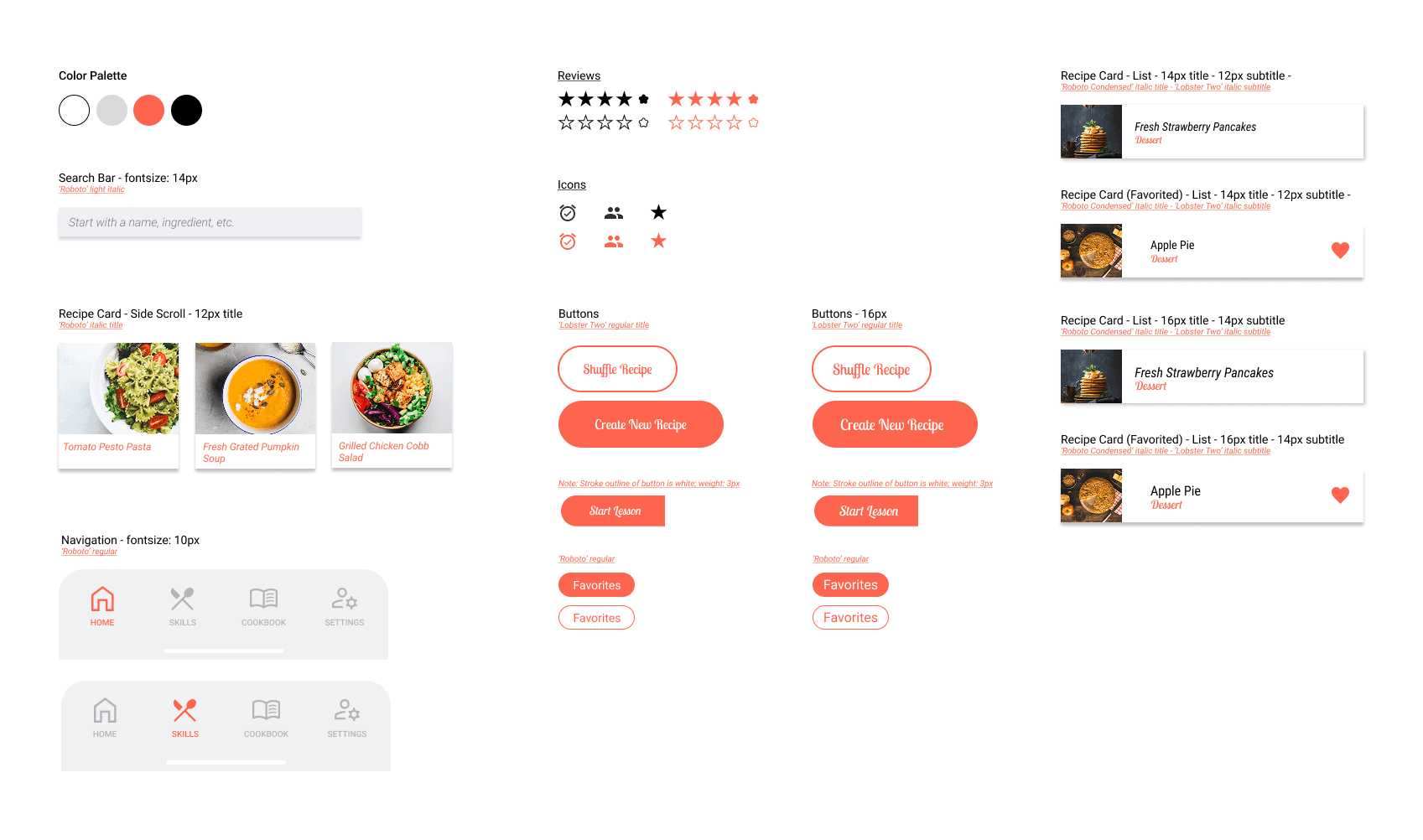
I knew I wanted to include colors that would relate to food and excites the appetite. Research shows that when it comes to color psychology around food, red drove energy and excitement in foods and brands.
This is emphasized by some of the natural colors of different products — some may get excited about the idea of red meat, juicy tomatoes and sauce on pizzas, and maybe even something fresh like strawberries or raspberries — the fact is, red exists in a lot of our daily foods.
Brands also use this color to drive excitement in their marketing. You may find familiars like McDonald’s, KFC, Heinz, and Chili’s that use red color palettes in several campaigns and promotions.
Prototyping
As I created the low-fidelity prototype for testing, I asked for feedback from 20 of my peers in the certification course to evaluate app interaction, information architecture, and navigation. These peers did not take the initial survey which helped me gather blind feedback that was unbiased.
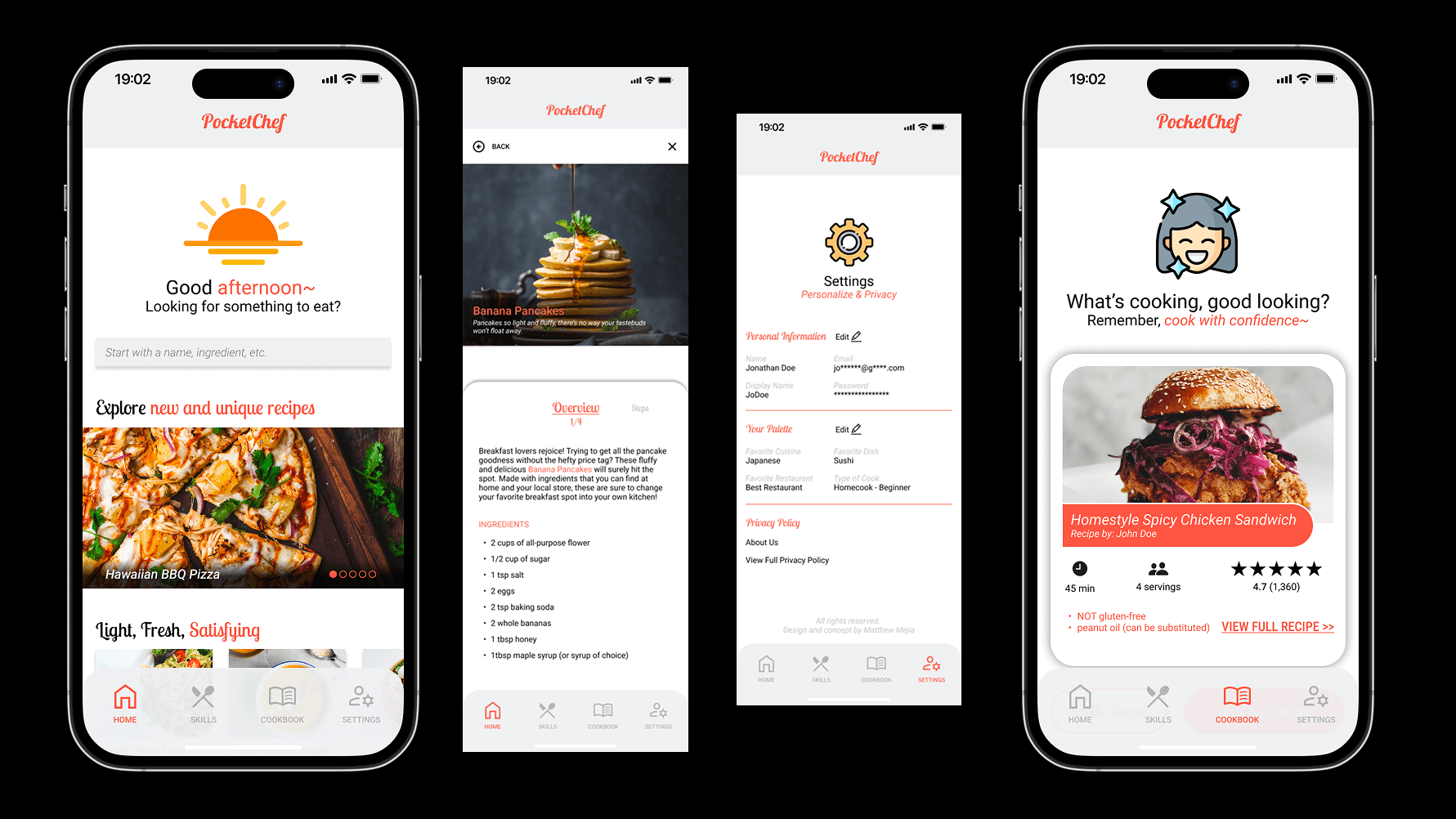
I was able to understand where users were getting stuck and what they wanted or saw as a barrier to their interactions. I used this information to develop a journey map and created a navigation I thought would more appeal to the users’ end goal, ensuring that I kept to the three goals we had set earlier in the project: Delicious recipes that are quick and easy to navigate.
Results
Success
The prototype was distributed to users in unmoderated environments to capture a deeper understanding of natural navigation through the app. Of the 20 users that had tested the app, 14 of them found it to be intuitive without needing additional guidance.
Within this project, I honed my skills in graphic design and branding, allowing me to conceptualize and build a this project from the ground up. The UX-Design process showed me the connection between human-centered design and visual design, which highlighted my strengths and opportunities for future projects.
Opportunities
Figma Proficiency
With my first time using Figma, I would have benefitted from a more robust tutorial than the one provided on the course. However, I found additional resources online that helped me become a stronger user in Figma and found great thoughts from other designers on their workflow and organization.
Collaboration
Working independently on the project was challenging creatively. During the course of this project, I felt that my designs and ideas were great, but I missed having some competitive feedback from peers that would allow me to expand on ideas and possibly produce new or different results.
Overall, I was able to learn a lot about myself and refine my knowledge in human-centered design thinking for business and development. These concepts acted as a strong foundation for my professional duties and helped influence future projects.